Step Deck Capability
Step Deck / Drop Deck Freight.
For freight too tall to ship legally on a flatbed. The lower deck buys you height, ramps let rolling and driving freight load itself, and we arrange light over-dimensional moves with permits. Cross-border and across Canada.
A step deck — also called a drop deck — exists for one reason: height. A flatbed sits high off the ground, so once your freight stacks past roughly ten feet on a flatbed, it is over-height and needs a permit. Drop the deck and that same load ships legal. If your piece is tall, this is usually the trailer you want.
The lower deck does two things for you. It lowers the load height so tall machinery and equipment ride inside legal limits, and it sits low enough to take ramps — so rolling and driving freight loads and unloads itself instead of needing a crane. For freight that is a little past legal, we also handle light over-dimensional moves with the permits and routing to back them.
When height or a ramp is the deciding factor, a step deck is the right call. When it is not — standard flat freight, or a very heavy or very large machine — we will tell you, and point you to a flatbed or a heavier configuration instead.
Tall machinery & equipment
The lower deck ships taller pieces inside legal height limits, so a machine that would be over-height on a flatbed moves without a permit.
Construction equipment, ramped
Rolling and driving freight loads straight onto the lower deck over ramps — no crane, no dock, no fuss at either end.
Over-height palletized freight
Tall crated or palletized loads that exceed flatbed height clearances ride legal on the dropped deck.
Light over-dimensional with permits
Over-width or over-height loads arranged with the right permits and routing for the jurisdictions on the run.
Step deck specifications
Typical equipment — we confirm the exact trailer, ramps and permit capability against your load at booking.
| Specification | Detail |
|---|---|
| Upper deck length | ~11′ (typical — confirmed at booking) |
| Lower deck length | ~37′ (typical — confirmed at booking) |
| Lower deck height | ~3′4″ off the ground (typical — confirmed at booking) |
| Legal load height (lower deck) | ~10′2″–10′6″ (typical — confirmed at booking) |
| Ramps | Available — capacity to confirm |
| Max legal payload | ~44,000–48,000 lb (typical — confirmed at booking) |
| Oversize permit capability | Yes — max dimensions to confirm |
Over-legal dimensions? We arrange permits and routing for over-width, over-height and over-length moves — send the dimensions for a quote: request a quote
Step Deck Questions
The questions shippers and brokers ask us.
What’s the maximum height I can ship?
On the lower deck you can typically run a load around 10′2″–10′6″ tall and stay legal — meaningfully more than a flatbed allows — but the exact ceiling depends on the deck height and the route. Anything past legal we move on a permit. Send us the load height and we will tell you straight whether it is a legal step-deck move or a permitted one.
Do you have ramps?
Yes — ramps are available so rolling and driving freight loads and unloads under its own power or by forklift, no crane required. Ramp capacity depends on the equipment, so tell us the weight and how the piece moves and we will confirm the right setup before pickup.
Can you handle oversize or permit loads?
Yes, for light over-dimensional freight. When a load is over-width, over-height or over-length, we arrange the permits and routing for each jurisdiction on the run and move it accordingly. Send the full dimensions and weight and we will confirm whether it is within our permit capability and quote it.
Step deck vs. RGN — which do I need?
A step deck handles tall freight that still fits within legal-to-light-oversize height once the deck is dropped, and is ideal for ramped equipment. An RGN (lowboy) drops far lower and is built for very tall or very heavy machinery that even a step deck cannot ship legally. If you are not sure, send the height, weight and dimensions — we will tell you which trailer the load actually needs.
What Rides on the Step Deck
The freight the dropped deck was built for.
When height or a ramp is the deciding factor, this is the trailer. Here is the freight that rides it — and why the lower deck earns its keep.
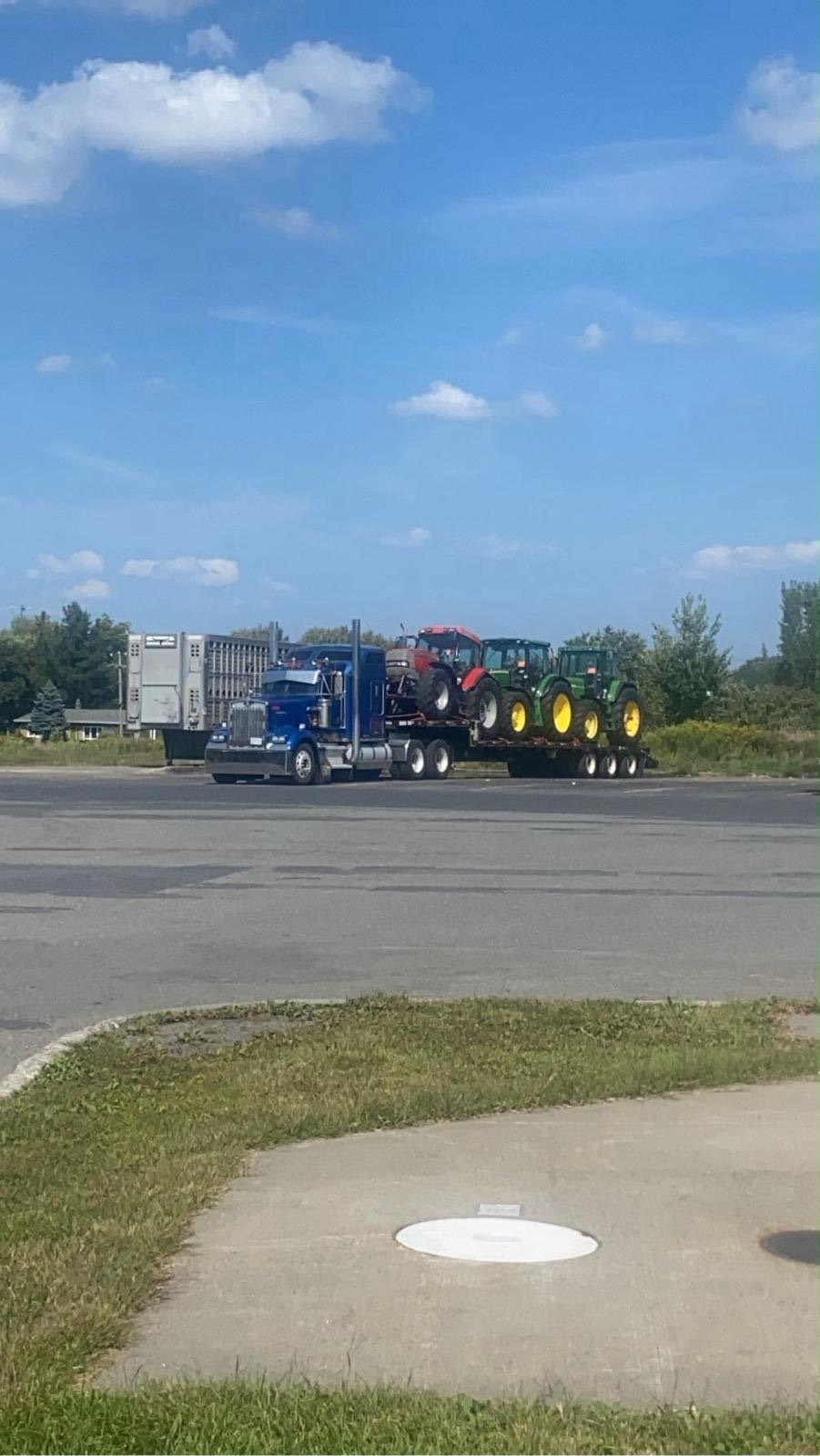
Machinery & Equipment
Tractors and equipment, ramped on and off.
Farm tractors, construction and agricultural equipment ride the step deck because they are tall, heavy and easier to load under their own power. Ramps let rolling and driving freight roll straight onto the lower deck — no crane, no dock, no fuss at either end.
Once it is on, it gets blocked, chained and braced for the route, and checked before the wheels turn. Send the make, weight and how it moves, and we will confirm the ramps and the securement.
The Deck Advantage
The lower deck is the whole point.
Drop the deck and tall loads that would be over-height on a flatbed ride inside legal limits — no permit, no wide-load escort, just a legal move. That extra clearance is what makes the step deck the right call when height is the problem.
And sitting low has a second payoff: ramps. Rolling and driving freight loads itself onto the deck instead of waiting on a crane. Taller loads legal, rolling loads simple — that is the deck advantage.
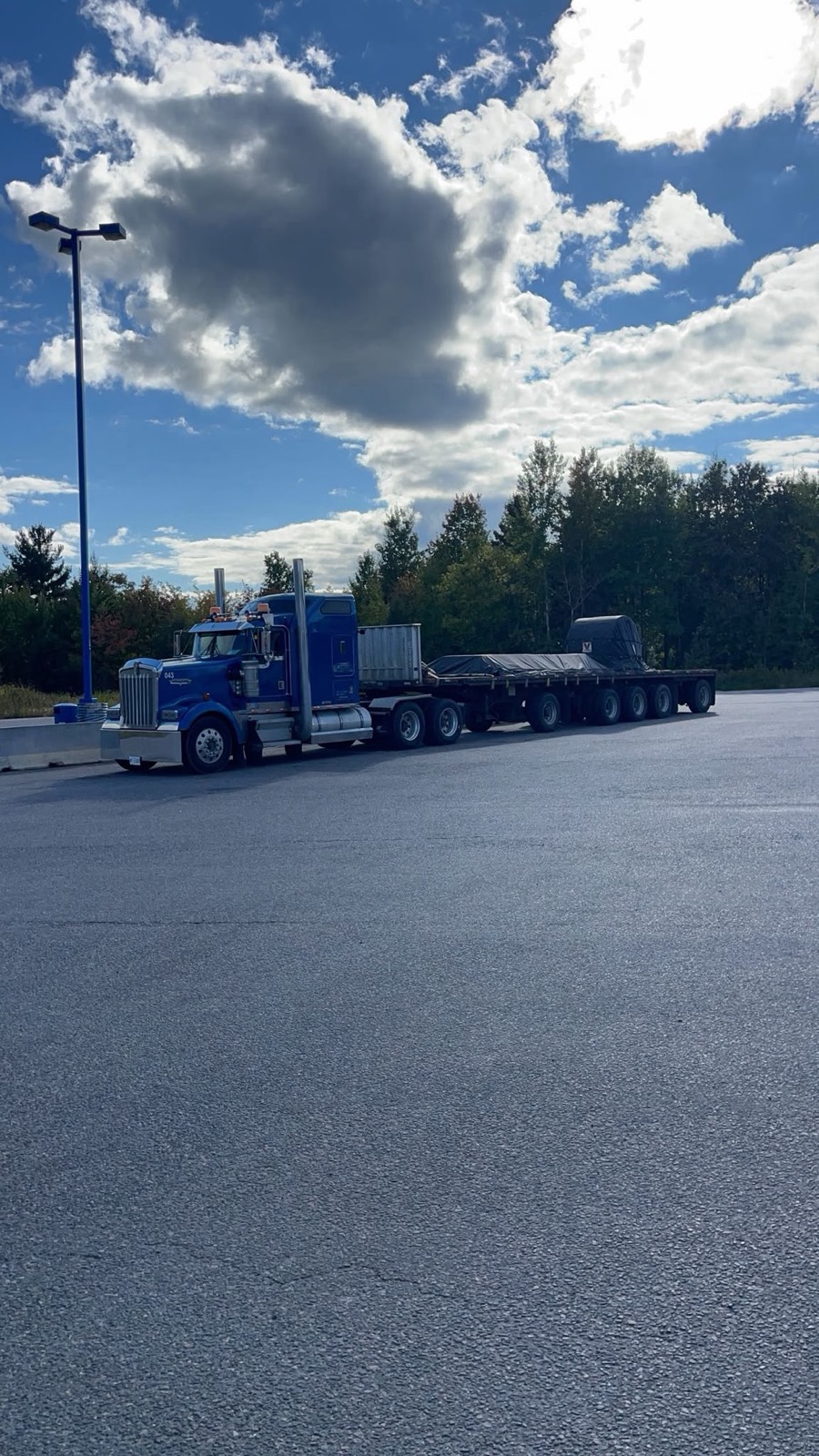
Tall & Oversize Capacity
Got a load that’s too tall for a flatbed?
Send the commodity, weight and dimensions — height especially — and we will confirm capacity and a rate the same business day, permits and ramps included where you need them. Cross-border and across Canada.